It's easy to communicate annual quotas and expectations for your sales teams. The harder task is equipping them with the skills, content and processes they need to actually deliver.
As you prepare for 2027, you'll be expected to get more productivity from your teams than ever before. Running the same playbook won't deliver the results you need to prove wins on AI time savings, operating efficiency and growth targets.
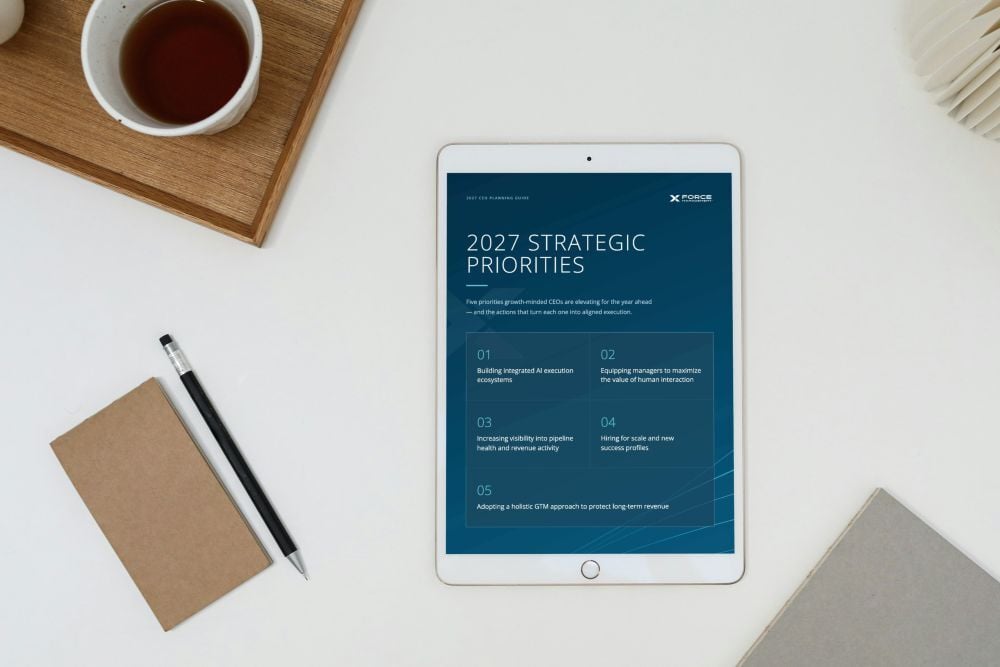
The 2027 Sales Director Planning Guide helps you translate your executive team's strategy into frontline results. Inside, we break down five strategic priorities many orgs are elevating this year and how to turn each into daily habits for your managers and reps. Plus, a practical framework for identifying execution breakdowns, standardizing performance and building coaching rhythms that protect your forecast — so you can lead with confidence in the new year.
Your 2027 sales plan lays out the territory approach, headcount, and tools you'll use to meet revenue expectations. But success depends on how well your team executes throughout the year. Most annual sales plans ramp expectations without analyzing whether their existing execution can support them — which is exactly where they tend to break down.
1. Enablement plans don't include alignment with other teams. One of the biggest opportunities for execution gaps and pipeline leak is how your team interacts with cross-functional partners for collaboration and handoffs. Partner with cross-functional leaders to ensure your enablement plans keep the entire revenue engine in lockstep.
2. Growth targets without manager capability. The plan sets the number and the territories, but skips the investment in coaching capability that determines whether managers can actually move the team's performance — even though effective managers can boost seller performance by up to six times.
3. New tools without a connected workflow. The plan calls for reps to adopt AI and new technology, but rarely defines how success looks within the actual selling motion — so tools end up magnifying inconsistencies instead of generating team-wide productivity gains.
4. Revenue goals without a pipeline standard. The plan assumes the pipeline will support the number, but without a shared standard for what qualifies a deal, forecast confidence erodes right when leadership needs it most.
5. Headcount without a repeatable ramp. The plan budgets for new reps to hit growth targets, but skips the repeatable onboarding and ramp process that determines whether those hires actually contribute before the plan needs them to.
A great plan for hitting an increasing number in 2027 starts with analyzing how your team is currently executing deal by deal. Before rolling out new tools or messaging, Directors of Sales should consider how consistently their managers are coaching to the current process. Structure the plan around closing the specific execution gaps on your team and creating a repeatable process reps can rely on before layering in new priorities.
AI tools only matter if they improve your reps' ability to deliver more value at the deal level. Focus less on forcing adoption and more on coaching the specific moments — prospecting, discovery, deal reviews — where AI can free up time for higher-value selling activity. Work with enablement and managers to build a coaching plan that reinforces the new workflow, not just a training session that introduces it.
When teams consistently falter on the forecast, it's usually because reps overvalued customer signals and advanced deals before they were ready. To improve forecasting, Sales Directors should equip managers to verify customer data and stage exit criteria by evidence, not just theword of the rep. Then, provide them with coaching plans to guide reps through a process that truly validates deal strength and creates stronger customer value.
When new priorities don't make it into the sales workflow, it's usually because reps don't see the benefit to their deals. Bridge the gap by communicating how new initiatives will make them more successful and building manager coaching cadences that help demonstrate it in practice. Elevate success stories with new tools and strategies to the whole team, so it's clear what good looks like and how it helps them achieve their personal goals.
Industry-leading companies turn to Force Management to help them develop revenue engines that get measurable results. We’ve partnered with over 150 companies that have reached univorn status of over $1B in valuation.
When you need to deliver on board expectations or reach the next round of funding, Force Management can help develop the repeatable system you need — and get it executing at high efficiency, quarter after quarter. Don't take it from us; explore what leaders of high-growth unicorn companies have to say about working with Force Management.
© Copyright 2026 Force Management.