Your C-suite sets ambitious goals for the coming year. It's up to you to make sure your sales teams have what they need to make it happen.
Your 2027 plan likely includes rolling out new AI workflows, ramping new hires, and building territories. But how can you ensure that all that work will actually drive the pipeline and closings you need to deliver?
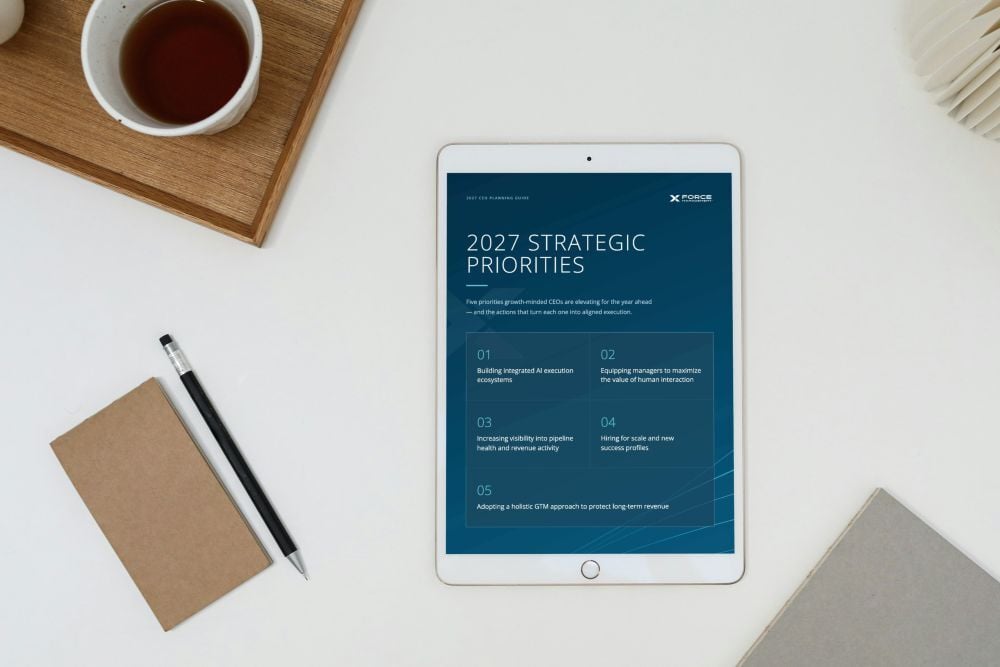
The 2027 Execution Planning Guide for VPs of Sales is designed to help you turn strategy into consistent execution on the frontline. Inside, we break down the five strategic priorities growth-minded sales leaders are elevating this year and give specific tactics to turn each into daily habits for your managers and reps. We provide a practical framework for diagnosing where execution breaks down, standardizing how your team sells, and building the coaching rhythms that protect your number — so your team hits quota, whatever the year brings.
Your 2027 sales plan looks strong on paper. How can you be sure your team delivers against it in the field? As VP of Sales, you can't personally work every deal in your reps' pipelines, so the plan only holds if the gaps below get closed first.
1. Enablement plans don't mandate alignment with other teams. One of the biggest sources of execution gaps and pipeline leak is how your sales org hands off to marketing, product and customer success. Prioritize alignment across these teams on data, messaging and account ownership — it rarely happens without top-down pressure and continued focus.
2. Revenue goals without a pipeline standard. The plan assumes pipeline will support the number. But without a shared standard for what qualifies a deal, forecast confidence erodes right when your CRO and the board need it most. Hold your managers accountable for forecast accuracy as a leading indicator of process health, not just a quarterly scorecard.
3. Growth targets without manager capability. The plan sets sales targets and account and territory strategies that support them, but skips the investment in coaching capability that elevates execution to the needed level. Ensure managers are equipped to inspect and guide strong pipeline processes that ensure new territories and accounts are maximized.
4. New tools without a connected workflow. The plan calls for reps to adopt AI and new technology, but rarely defines how success looks within the actual selling motion — so tools end up magnifying inconsistencies instead of generating org-wide productivity gains. Set baseline KPIs around the specific use cases AI should improve, not generic adoption metrics.
5. Headcount without a repeatable ramp. The plan budgets for new reps to hit growth targets, but skips the repeatable hiring, onboarding and ramp process that determines whether those hires contribute before the plan needs them to — and whether your new success profiles actually fit the AI-integrated workflows your team runs today.
A great plan for hitting 2027 sales targets starts with analyzing how your team is currently executing in the field. Before rolling out new tools or messaging, VPs of Sales should consider the consistency of their current sales process. Structure the new plan around closing the gaps in current execution and creating a more predictable process as the foundation for reps to act on new priorities.
AI initiatives for 2027 will be measured in revenue impact, not activity. Focus on the specific moments in the sales process — prospecting, discovery, deal reviews — where AI can meaningfully impact productivity and outcomes. Partner with enablement and RevOps to build workflows reps will actually use, plus a coaching plan for managers to reinforce AI usage and data standards in the field. Improve adoption by communicating expectations and processes to the sales team with a clear connection to how it will impact their success.
Forecast accuracy starts with what your managers are validating in deal reviews. To improve accuracy in the upcoming year, equip managers with a clear standard for what qualifies pipeline — documented customer evidence, not just rep confidence. When your team has a repeatable process for validating deal stages, you can trust the number you roll up. Learn more in our article on how revenue leaders increase forecast confidence.
When kickoff fails to stick, it's typically because there was a lot of energy in the room but not enough structure for reinforcement afterward. Reps may leave excited about new priorities, but they need managers equipped to coach them deal by deal. Building manager accountability directly tied to kickoff priorities is the best way to make sure the investment pays off.
Industry-leading sales teams turn to Force Management to help them develop revenue engines that get measurable results. We’ve partnered with over 150 companies that have reached unicorn status of over $1B in valuation.
When you need to deliver on board expectations or reach the next round of funding, Force Management can help develop the repeatable system you need — and get it executing at high efficiency, quarter after quarter. Don't take it from us; explore what leaders of high-growth unicorn companies have to say about working with Force Management.
© Copyright 2026 Force Management.